19 May 20265 Min Read
Sovereign Shield: RaaS Framework
የሉዓላዊ ጋሻ ስትራቴጂክ ማዕቀፍ
Sovereign Shield RaaS Framework
Executive Summary: Transitioning to Technical Resilience
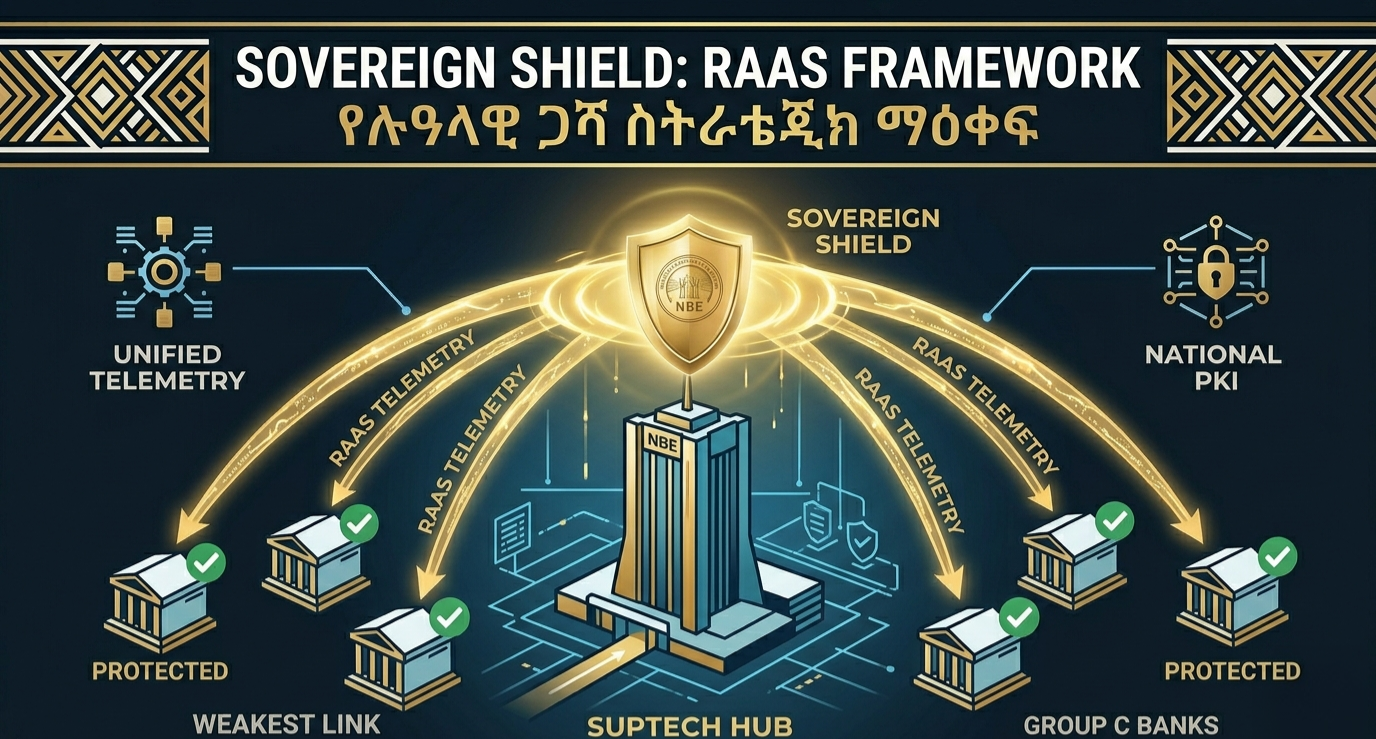
The Ethiopian financial landscape is currently undergoing a digital metamorphosis. However, this evolution introduces a systemic vulnerability: the disparity in cybersecurity investment between Tier1 institutions and Group C (emerging/small) banks. The Sovereign Shield Framework marks a strategic transition from traditional regulatory oversight—which merely dictates standards—to a technical implementation model known as Regulator as a Service (RaaS). In this model, the National Bank of Ethiopia (NBE) acts not only as a supervisor but as a primary provider of high cost, critical security infrastructure.
The ""Weakest Link"" Doctrine
In a hyperconnected financial ecosystem, the security of the whole is determined by its most vulnerable node. Group C banks often lack the capital expenditure (CAPEX) required to deploy world-class Security Operations Centers (SOC), Extended Detection and Response (XDR) systems, and robust disaster recovery sites. Cyber adversaries frequently exploit these smaller entities as entry points into the national payment switch or the interbank clearing system. The Sovereign Shield eliminates this ""weakest link"" by creating a centralized defense umbrella.
Technical Implementation Pillars
The RaaS framework is built upon three foundational technical pillars managed by the NBE:
1. National PKI (Public Key Infrastructure) Integration:
The framework mandates the use of a centralized National PKI to provide a ""Root of Trust."" By issuing and managing digital certificates for all Group C banks, the NBE ensures that every transaction, API call, and data exchange is encrypted, authenticated, and nonrepudiable. This removes the burden of expensive certificate management from smaller banks while standardizing encryption protocols across the nation.
2. Unified Telemetry and Collective Intelligence:
Under RaaS, the NBE hosts a unified telemetry engine. Group C banks feed anonymized logs and traffic data into a central data lake. This allows the NBE to utilize machine learning to detect patterns of attack that might be invisible to a single institution. When a threat is detected at one bank, the ""Shield"" automatically updates the firewall rules and endpoint protections for all participating banks in realtime.
3. Shared Security Operations Center (SOC as a Service)
The NBE provides a 24/7 managed detection and response service. Instead of each small bank hiring scarce cybersecurity talent, the NBE centralizes hightier analysts to monitor the infrastructure of all Group C banks, providing a level of protection that would otherwise be financially unattainable for them.
Conclusion
The Sovereign Shield RaaS Framework redefines the relationship between the regulator and the regulated. By hosting highcost security assets, the NBE ensures that financial inclusion does not come at the cost of national security. It transforms the Ethiopian banking sector into a unified digital fortress, where the defense of one is the defense of all.
Executive Summary: Transitioning to Technical Resilience
The Ethiopian financial landscape is currently undergoing a digital metamorphosis. However, this evolution introduces a systemic vulnerability: the disparity in cybersecurity investment between Tier1 institutions and Group C (emerging/small) banks. The Sovereign Shield Framework marks a strategic transition from traditional regulatory oversight—which merely dictates standards—to a technical implementation model known as Regulator as a Service (RaaS). In this model, the National Bank of Ethiopia (NBE) acts not only as a supervisor but as a primary provider of high cost, critical security infrastructure.
The ""Weakest Link"" Doctrine
In a hyperconnected financial ecosystem, the security of the whole is determined by its most vulnerable node. Group C banks often lack the capital expenditure (CAPEX) required to deploy world-class Security Operations Centers (SOC), Extended Detection and Response (XDR) systems, and robust disaster recovery sites. Cyber adversaries frequently exploit these smaller entities as entry points into the national payment switch or the interbank clearing system. The Sovereign Shield eliminates this ""weakest link"" by creating a centralized defense umbrella.
Technical Implementation Pillars
The RaaS framework is built upon three foundational technical pillars managed by the NBE:
1. National PKI (Public Key Infrastructure) Integration:
The framework mandates the use of a centralized National PKI to provide a ""Root of Trust."" By issuing and managing digital certificates for all Group C banks, the NBE ensures that every transaction, API call, and data exchange is encrypted, authenticated, and nonrepudiable. This removes the burden of expensive certificate management from smaller banks while standardizing encryption protocols across the nation.
2. Unified Telemetry and Collective Intelligence:
Under RaaS, the NBE hosts a unified telemetry engine. Group C banks feed anonymized logs and traffic data into a central data lake. This allows the NBE to utilize machine learning to detect patterns of attack that might be invisible to a single institution. When a threat is detected at one bank, the ""Shield"" automatically updates the firewall rules and endpoint protections for all participating banks in realtime.
3. Shared Security Operations Center (SOC as a Service)
The NBE provides a 24/7 managed detection and response service. Instead of each small bank hiring scarce cybersecurity talent, the NBE centralizes hightier analysts to monitor the infrastructure of all Group C banks, providing a level of protection that would otherwise be financially unattainable for them.
Conclusion
The Sovereign Shield RaaS Framework redefines the relationship between the regulator and the regulated. By hosting highcost security assets, the NBE ensures that financial inclusion does not come at the cost of national security. It transforms the Ethiopian banking sector into a unified digital fortress, where the defense of one is the defense of all.
የሉዓላዊ ጋሻ ስትራቴጂክ ማዕቀፍ
የሉዓላዊ ጋሻ (Sovereign Shield) RaaS ማዕቀፍ
ዋና መግለጫ፦ ከንድፈሀሳብ ወደ ተግባራዊ ጥበቃ
የኢትዮጵያ የፋይናንስ ዘርፍ በአሁኑ ወቅት ፈጣን የዲጂታል ሽግግር ላይ ይገኛል። ሆኖም ይህ ሽግግር አንድ ትልቅ ስጋት ይዞ መጥቷል፤ ይህም በትልልቅ ባንኮች እና በምድብ ""ሐ"" (አነስተኛ/አዳዲስ) ባንኮች መካከል ያለው የሳይበር ደህንነት አቅም ልዩነት ነው። የሉዓላዊ ጋሻ (Sovereign Shield) ስትራቴጂክ ማዕቀፍ ብሔራዊ ባንክ ከለመደው ተቆጣጣሪነት ሚና ወጥቶ፣ የቴክኖሎጂ መሰረተልማት አቅራቢ ወደሚሆንበት ""ተቆጣጣሪው እንደ አገልግሎት ሰጪ"" (Regulator as a Service RaaS) ሞዴል መሸጋገርን ያመለክታል። በዚህም ብሔራዊ ባንክ ከፍተኛ ወጪ የሚጠይቁ የደህንነት ቴክኖሎጂዎችን በመገንባት ለአነስተኛ ባንኮች ጥበቃ ያደርጋል።
""ደካማው ሰንሰለት"" እና ስጋቱ
በተሳሰረ የፋይናንስ ሥርዓት ውስጥ፣ የአንድ ሥርዓት ጥንካሬ የሚለካው እጅግ ደካማ በሆነው አባል ነው። ምድብ ""ሐ"" ባንኮች እንደ የደህንነት ክትትል ማዕከል (SOC) እና የተራቀቁ የመከላከያ ሥርዓቶችን ለመገንባት የሚያስችል በቂ በጀት ላይኖራቸው ይችላል። የሳይበር ጥቃት አድራሾች እነዚህን አነስተኛ ባንኮች እንደ መግቢያ በመጠቀም አጠቃላይ የሀገሪቱን የክፍያ ሥርዓት አደጋ ላይ ሊጥሉ ይችላሉ። የሉዓላዊ ጋሻ ማዕቀፍ ይህንን ""ደካማ ሰንሰለት"" ለማጥፋት የጋራ መከላከያ ግንብ ይገነባል።
የቴክኒክ አተገባበር ምሶሶዎች
የ RaaS ማዕቀፍ በብሔራዊ ባንክ በሚመሩ ሶስት ዋና ዋና የቴክኒክ ምሶሶዎች ላይ የተመሰረተ ነው፡
1. የብሔራዊ ፐብሊክ ኪይ መሰረተልማት (National PKI)፦
ይህ ሥርዓት ለማንኛውም ዲጂታል ልውውጥ ""የእምነት ምንጭ"" ሆኖ ያገለግላል። ብሔራዊ ባንክ ለሁሉም ምድብ ""ሐ"" ባንኮች የዲጂታል ሰርተፍኬቶችን በማቅረብና በማስተዳደር፣ እያንዳንዱ የገንዘብ ዝውውር እና የዳታ ልውውጥ በምስጢር የተጠበቀ (Encrypted) እና ትክክለኛነቱ የተረጋገጠ መሆኑን ያረጋግጣል። ይህም አነስተኛ ባንኮች የራሳቸውን ውድ ሥርዓት ከመገንባት ያድናቸዋል።
2. የተቀናጀ የቴሌሜትሪ እና መረጃ ትንተና፦
በዚህ ሥርዓት ውስጥ አነስተኛ ባንኮች የኔትወርክ እንቅስቃሴ መረጃዎቻቸውን (Logs) ወደ ማዕከላዊ የዳታ ማከማቻ ይልካሉ። ብሔራዊ ባንክ ሰው ሰራሽ አስተውሎትን (AI) በመጠቀም በአንድ ባንክ ላይ የታየን ጥቃት በፍጥነት በመለየት፣ ሌሎች ባንኮች ላይ ጥቃቱ ሳይደርስ የመከላከያ እርምጃ እንዲወሰድ ያደርጋል። አንዱ ጋር የታየ ስጋት ለሁሉም ትምህርት እና መከላከያ ይሆናል።
3. የጋራ የደህንነት ኦፕሬሽን ማዕከል (Shared SOC)፦
ብሔራዊ ባንክ የ24 ሰዓት የክትትል አገልግሎት ይሰጣል። እያንዳንዱ ባንክ የሳይበር ባለሙያዎችን ለብቻው ከመቅጠር ይልቅ፣ ብሔራዊ ባንክ ባሰለጠናቸው ከፍተኛ ባለሙያዎች አማካኝነት የአነስተኛ ባንኮችን ደህንነት በጋራ ይጠብቃል።
ማጠቃለያ
የሉዓላዊ ጋሻ RaaS ማዕቀፍ በተቆጣጣሪው እና በተቆጣጣሪው መካከል ያለውን ግንኙነት በአዲስ መልክ ይተረጉማል። ብሔራዊ ባንክ ውድ የሆኑ የደህንነት መሠረተልማቶችን በባለቤትነት በመያዝ፣ የፋይናንስ ተደራሽነት ከሀገራዊ ደህንነት ጋር ተጣጥሞ እንዲሄድ ያደርጋል። ይህ አሰራር የኢትዮጵያን የባንክ ዘርፍ ወደ አንድ የተቀናጀ ዲጂታል ምሽግ በመቀየር የአንዱ ደህንነት የሁሉም ደህንነት መሆኑን ያረጋግጣል።
ዋና መግለጫ፦ ከንድፈሀሳብ ወደ ተግባራዊ ጥበቃ
የኢትዮጵያ የፋይናንስ ዘርፍ በአሁኑ ወቅት ፈጣን የዲጂታል ሽግግር ላይ ይገኛል። ሆኖም ይህ ሽግግር አንድ ትልቅ ስጋት ይዞ መጥቷል፤ ይህም በትልልቅ ባንኮች እና በምድብ ""ሐ"" (አነስተኛ/አዳዲስ) ባንኮች መካከል ያለው የሳይበር ደህንነት አቅም ልዩነት ነው። የሉዓላዊ ጋሻ (Sovereign Shield) ስትራቴጂክ ማዕቀፍ ብሔራዊ ባንክ ከለመደው ተቆጣጣሪነት ሚና ወጥቶ፣ የቴክኖሎጂ መሰረተልማት አቅራቢ ወደሚሆንበት ""ተቆጣጣሪው እንደ አገልግሎት ሰጪ"" (Regulator as a Service RaaS) ሞዴል መሸጋገርን ያመለክታል። በዚህም ብሔራዊ ባንክ ከፍተኛ ወጪ የሚጠይቁ የደህንነት ቴክኖሎጂዎችን በመገንባት ለአነስተኛ ባንኮች ጥበቃ ያደርጋል።
""ደካማው ሰንሰለት"" እና ስጋቱ
በተሳሰረ የፋይናንስ ሥርዓት ውስጥ፣ የአንድ ሥርዓት ጥንካሬ የሚለካው እጅግ ደካማ በሆነው አባል ነው። ምድብ ""ሐ"" ባንኮች እንደ የደህንነት ክትትል ማዕከል (SOC) እና የተራቀቁ የመከላከያ ሥርዓቶችን ለመገንባት የሚያስችል በቂ በጀት ላይኖራቸው ይችላል። የሳይበር ጥቃት አድራሾች እነዚህን አነስተኛ ባንኮች እንደ መግቢያ በመጠቀም አጠቃላይ የሀገሪቱን የክፍያ ሥርዓት አደጋ ላይ ሊጥሉ ይችላሉ። የሉዓላዊ ጋሻ ማዕቀፍ ይህንን ""ደካማ ሰንሰለት"" ለማጥፋት የጋራ መከላከያ ግንብ ይገነባል።
የቴክኒክ አተገባበር ምሶሶዎች
የ RaaS ማዕቀፍ በብሔራዊ ባንክ በሚመሩ ሶስት ዋና ዋና የቴክኒክ ምሶሶዎች ላይ የተመሰረተ ነው፡
1. የብሔራዊ ፐብሊክ ኪይ መሰረተልማት (National PKI)፦
ይህ ሥርዓት ለማንኛውም ዲጂታል ልውውጥ ""የእምነት ምንጭ"" ሆኖ ያገለግላል። ብሔራዊ ባንክ ለሁሉም ምድብ ""ሐ"" ባንኮች የዲጂታል ሰርተፍኬቶችን በማቅረብና በማስተዳደር፣ እያንዳንዱ የገንዘብ ዝውውር እና የዳታ ልውውጥ በምስጢር የተጠበቀ (Encrypted) እና ትክክለኛነቱ የተረጋገጠ መሆኑን ያረጋግጣል። ይህም አነስተኛ ባንኮች የራሳቸውን ውድ ሥርዓት ከመገንባት ያድናቸዋል።
2. የተቀናጀ የቴሌሜትሪ እና መረጃ ትንተና፦
በዚህ ሥርዓት ውስጥ አነስተኛ ባንኮች የኔትወርክ እንቅስቃሴ መረጃዎቻቸውን (Logs) ወደ ማዕከላዊ የዳታ ማከማቻ ይልካሉ። ብሔራዊ ባንክ ሰው ሰራሽ አስተውሎትን (AI) በመጠቀም በአንድ ባንክ ላይ የታየን ጥቃት በፍጥነት በመለየት፣ ሌሎች ባንኮች ላይ ጥቃቱ ሳይደርስ የመከላከያ እርምጃ እንዲወሰድ ያደርጋል። አንዱ ጋር የታየ ስጋት ለሁሉም ትምህርት እና መከላከያ ይሆናል።
3. የጋራ የደህንነት ኦፕሬሽን ማዕከል (Shared SOC)፦
ብሔራዊ ባንክ የ24 ሰዓት የክትትል አገልግሎት ይሰጣል። እያንዳንዱ ባንክ የሳይበር ባለሙያዎችን ለብቻው ከመቅጠር ይልቅ፣ ብሔራዊ ባንክ ባሰለጠናቸው ከፍተኛ ባለሙያዎች አማካኝነት የአነስተኛ ባንኮችን ደህንነት በጋራ ይጠብቃል።
ማጠቃለያ
የሉዓላዊ ጋሻ RaaS ማዕቀፍ በተቆጣጣሪው እና በተቆጣጣሪው መካከል ያለውን ግንኙነት በአዲስ መልክ ይተረጉማል። ብሔራዊ ባንክ ውድ የሆኑ የደህንነት መሠረተልማቶችን በባለቤትነት በመያዝ፣ የፋይናንስ ተደራሽነት ከሀገራዊ ደህንነት ጋር ተጣጥሞ እንዲሄድ ያደርጋል። ይህ አሰራር የኢትዮጵያን የባንክ ዘርፍ ወደ አንድ የተቀናጀ ዲጂታል ምሽግ በመቀየር የአንዱ ደህንነት የሁሉም ደህንነት መሆኑን ያረጋግጣል።
© 2026 TIMONA Intelligence Hub